Thursday, July 9, 2009

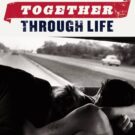
Gerry Rafferty, "City to City" (1978)

NICK DERISO: There is, inside of Gerry Rafferty's most famous album -- and, as a solo artist, his most famous song -- this sense of rebirth, of finding one's way again.

"When you wake up, it's a new morning," he sings on "Baker Street," "the sun is shining, it's a new morning ... you're going, you're going home ..."

Forget the way time has softened this tune, nearly filed it down into Muzak. "Baker Street," and the bulk of Rafferty's "City to City," still sounds like a very adult look back at weary-eyed adenoidal wonder.

Rafferty captures both every teen's overwrought personal manifest destiny -- the record is a damn good excuse for driving too fast with the windows rolled down, because tomorrow's got to be better and anywhere is better than here -- even while he reconciles with finding, finally, what you are looking for.

Of course Rafferty's voice, sad but hopeful, sounded familiar -- even if nobody knew his name, since he'd had a 1973 hit with "Stuck in the Middle With You" as part of the band Stealers Wheel. But that project ended in a nest of legal problems, and it would be years before Rafferty could untangle himself for a solo career.

That time away, then, was part of what made "City to City" -- powered by the singles "Baker Street" (No. 2 in the U.S. and No. 3 in Britain; embedded below), "Right Down the Line" and "Home and Dry" -- such a jolting surprise. The album eventually sold more than 5.5 million copies, and remained on the charts for 49 weeks.

I've always thought, too, that "City to City" sold so well because it sounded like the great, lost Paul McCartney album of the period -- filled with shuddering joy yet also a resigned majesty nearly unmatched that year by anyone, Beatle or otherwise.

"Right Down the Line" (No. 12 on the Billboard Hot 100 chart; No. 1 on the Hot Adult Contemporary Tracks charts) belied its lyrics with a refined sense of melodic melancholy. "Home and Dry" (No. 28 in the U.S. in early 1979), featured all of the studio tricks of the day -- synths, strings, choirs of background vocalists -- but transcended its time with an unabashful hopefulness that's all but lost in the world of too-hip pop music anymore. The capstone, of course, arrived by way of this souring, almost mythical sax solo on "Baker Street" by Rapheal Ravenscroft (a sessions player who'd worked with Pink Floyd, Marvin Gaye, Abba, and others).

There's more to "City to City," including the gospelly "Whatever's Written In Your Heart," the loopy "Mattie's Rag," the chugging title track, and the towering yet somehow intimate "Waiting for the Day."

Still, for whatever reason, Rafferty never settled back into this sweet spot. His next album, 1979's "Night Owl," produced "Days Gone Down" and "Get It Right Next Time" -- but neither could get past No. 17 on the charts. Then, he sank again into a curious obscurity.

Until earlier this year, anyway. Recent reports out of London have Rafferty turning to drink, busking for tips, trashing hotel rooms, suffering from a liver ailment.

No matter. Yearning yet forever young, my old vinyl version of "City to City" is a reverie that will always take me back. Back to "Baker Street," back to teenage dreams of flight -- to a place we could never be found, to a place far away from this town -- but then, importantly, to our inevitable return.

It's appropriate, for me, then that I still must dust off the old turntable -- carefully preserved, yet stored away from my every-day grownup life -- to get there.

Gerry Rafferty takes me full circle.


Purchase: Gerry Rafferty - City to City

MORE…

Wednesday, July 8, 2009

Matt Wilson Quartet - That's Gonna To Leave A Mark (2009)

by Pico

The highly versatile drummer Matt Wilson has made a name as a leader of bands that straddled the fence between post-bop and avant garde with other music forms tossed in for grins ever since his headliner debut As Wave Follows Wave, which featured tenor sax veteran Dewey Redman. Soon afterwards, Wilson formed his piano-less Quartet that includes Andrew D'Angelo and originally featured Joel Frahm on sax. This crew recorded a handful of albums in the late '90's-early aughts that expanded on Wilson's fondness for jumping sub-genres and maintained an element of wit to keep the proceedings fun and not take itself too seriously.

After a five or six year recording layover during which he concentrated more on his piano-based Arts And Crafts band, Wilson has reconvened his Quartet in the studio, and the comeback album That's Gonna Leave Mark, released Tuesday, is the result. With Frahm long since replaced by Jeff Lederer on saxes and Chris Lightcap now manning the standup bass, the Quartet returns with its trademark energy, enthusiasm and light humor intact. And everyone in the band contributes tunes, which certainly can't hurt if you're looking for diversity of ideas.

And so as before, Wilson & Co. merrily traipses across all manners of jazz attitudes: from the and the balls-out free form of the titular"That's Gonna Leave A Mark,," the to the rumbling rocker "Area Man" and the gospel tinged "Getting Friendly."

Wilson usually pays tribute to Ornette Coleman somewhere on his records, and for this one, it's found on the opener, D'Angelo perky harmolodic number "Shooshabuster." D'Angelo's alto blowing is as raw and fervent as is allowed in a studio (you can even hear the shouts of encouragement). That's followed by the shuffling blues-based "Arts & Crafts." "Rear Control" finds both horn players on clarinets, playing through three or four disparate tempos.

John Lewis' standard composition "Two Bass Hit" gets a treatment similar to what Miles did to it in 1958, and a fine vehicle for all players to strut their stuff, especially Lederer on tenor sax. "Lucky" is a solemn, thoughtful song Lederer built from 12 notes chosen by his daughter, a highly original way to write a composition. Lightcap's "Celibate Oriole" is just good, punchy whack jazz.

There's a couple of non-originals tossed in at the end, too. The traditional hymn "Come And Find The Quiet Center" is given a somber reading and is highlighted by Lightcap's delicate bass solo. The concluding cover is War's 1975 hit "Why Can't We Be Friends?" a clever choice when you think about it. It makes for a great "anthem vibe" that gets listeners involved and the background singing assistance from the female vocal trio Swayettes and Wilson's own family adds to the festive sensation. If you really know the song, you'll find that D'Angelo, Lederer and Lightcap are mimicking the lead vocal parts of the original pretty faithfully.

Matt Wilson summarizes the approach he and his cohorts took on this album like this: "There's a lot of alignment in the music and there's a lot of collision. I like all of that; it doesn't always have to be smooth sailing." I like all of that, too. It's the very thing that makes That's Gonna To Leave A Mark leave a mark on your ears.

This is Wilson's eighth disc for Palmetto Records, the only record label he's recorded for as a leader. Visit Matt's website here.


Purchase: Matt Wilson - That's Gonna To Leave A Mark

MORE…

Saturday, July 4, 2009

Rerun: A 'different' kind of revolution for July 4th

NICK DERISO: "Revolution No. 9," from the Beatles' 1968 self-titled release, was for me the complete realization of tape-loop experimentation that began on several earlier songs by John Lennon - including "Tomorrow Never Knows," from '66's "Revolver"; and (more famously) in the outros for "Strawberry Fields Forever" and "I am The Walrus."

Lennon never gave any complete explanation for orchestrating an extended composition with noises and loops. He also dabbled extensively with ambient sounds in a trio of solo recordings -- famously calling back and forth with Yoko over a range of emotions (and their own pulses) during the entirety of side one of 1969's "The Wedding Album."

But it is here, as part of a larger recording most commonly referred to as "The White Album," that we find the high-water mark in a period for Lennon lasting until 1972 in which he staged, along with wife Yoko, a series of outsider art exhibits, books, recordings and stunts.

Each sound on the convoluted, but fascinating "Revolution No. 9" appears to represent an instrument or group of instruments. The rising emotions have a power that suggests the dying of a life, or the end of time.

Throughout, a recurring theme is found in the words "number nine," and no small amount of mythology has built up around it. Lennon considered 9 to be of great significance. And, perhaps it was.

He was born on the 9th of October, as was second son Sean. He lived at 9 Newcastle Road in Liverpool, then later lived at the Dakota in New York City. That's on 72nd Street; the digits add up to ... 9.

One of his earliest compositions was a train song "One After 909" - which later appeared in a live version on "Let It Be." He also had a hit in the 1970s with a tune called "No. 9 Dream."

He was shot, too, on 72nd Street, and declared dead at 11:07 (again, digits add up to 9) in the Roosevelt Hospital on 9th Avenue. Although, this all took place in New York on Dec. 8, in Lennon's birthplace Liverpool (five hours ahead), it was the morning of ... the 9th.

Maybe all that means something, maybe not. It's weirdly interesting, though. Like "Revolution No. 9."

Lennon spent weeks on this recording, which was originally written as an extended coda to what would become the song called "Revolution 1" on "The White Album."

He wasn't finished with the concept, and continued fiddling with it for years. But the Beatles' core fanbase never really connected with Lennon's experiment. His first, most famous, attempt remains the most realized, anyway.

Still, seen as avant-garde then, it can now be hailed as the first flowerings of punk. Husker Du, here we come.

Lennon stumbled upon some other things that were frighteningly prescient along the way. "Every one of them knew," a voice intones on this track, "that as time went by they'd get a little bit older and a little bit slower."

The remaining Beatles certainly did. (After all, we later learned that McCartney was capable of a series of too-precious disasters like "Spies Like Us" or, say, "Say, Say, Say.")

But "Revolution No. 9" -- not necessarily listenable, yet a still-powerful argument for his frisky genius -- ensures that Lennon never will.


Purchase: The Beatles - The Beatles (aka 'The White Album,' 1968)

MORE…

Thursday, July 2, 2009

One Track Mind: Kenny Loggins (with Michael Jackson) "Who's Right, Who's Wrong" (1979)

by Pico

Ever had a song that you enjoyed listening to when it first came out, then moved on and forgot about it only to have some event trigger the memory of that song many years later? Such was the case for me with a thirty year old deep cut of Kenny Loggins', "Who's Right, Who's Wrong."

That was the track that commenced with a buttermilk-rich guitar shortly after setting the needle down on the flip side of Loggins' yacht rock extravaganza, Keep The Fire. Archtypical late seventies blue-eyed soul popularized by Hall and Oates, with an organ-based slow groove that stands in the same company as "Sara Smile." Loggins' emotive vocals wouldn't make Daryl Hall tremble but he makes his point as he achingly sings "I've grown tired of fighting." The background vocals take on a prominent role, too, taking some of the lines in the verses and virtually the entire chorus. The climax comes at a righteous breakdown section that finds Loggins pleading with his pissed off lover while his vocal assistants testifies "right or wrong, baby" alleluias.

Oh and by the way, the off the wall trigger that culled this tune from the deep recesses of my mind was the untimely death last week of one of those backup singers. I thought even back in 1979 that it was pretty cool Loggins was able to get a voice of Michael Jackson's stature to come in behind Kenny and play second fiddle, and today that just seems downright astonishing. A fairly close listen leaves no question that it's truly the Gloved One crooning back there.

There's a few other notable names involved with "Who's Right;" the other backup singer and the song's co-writer with Loggins is Richard Page. His brief turn in the white hot spotlight would come about five or six years later as the frontman for Mr. Mister. The soulful tenor sax the permeates the latter part of the song came from one half of fraternal funk-jazz outfit of the time, The Brecker Brothers, but Michael Brecker had still yet to make his mark as a solo artist. Honestly, that Michael's death still hits me harder than the other Michael's ever will, but Brecker sideman appearances are as numerous as Texas red ants in July. Jackson? Not so much.

To top it off, the song along with the rest of the album was produced by another legend, Tom Dowd (Eric Clapton, Rod Stewart, Lynyrd Skynyrd, Chicago and MeatLoaf).

For the trivia-obsessed, here's another MJ connection to Keep The Fire: the album's big hit was "This Is It." That's precisely what The King Of Pop said about his swan song 50 concert run in London, scheduled to begin this month. Sadly, his heart had the same message for Jackson himself last month.

Sample: Kenny Loggins "Who's Right, Who's Wrong"

Purchase: Kenny Loggins - Keep The Fire


"One Track Mind" is a more-or-less weekly drool over a single song selected on a whim and a short thesis on why you should be drooling over it, too.

MORE…

Wednesday, July 1, 2009

Quickies: Three Fresh Ones From ECM Records (Andy Sheppard, Evan Parker, Louis Sclavis)

by Pico

Tuesday was pretty busy day for Manfred Eicher's fabled label ECM Records, as this was a day when they are released no less than five CD's. For this all-ECM version of Quickies, we're going to take some fairly brief looks at three of these, the more jazz-oriented ones. But like so many ECM titles, these aren't jazz in the traditional sense. The first selection subtly infuses East Indian and electronics into acoustic jazz, the second one is electro-acoustic whack jazz and the last has a little bit of a rock streak in it. All three are as well-performed and recorded as they are adventurous. It's a combination that hard to resist, and signals that ECM's standards remain firmly intact forty years after recording its first album.


Andy Sheppard Movements In Colour

British saxophone player Andy Sheppard is no stranger to ECM, having recorded a dozen albums as a member of Carla Bley's ensemble under Bley's ECM boutique label WATT, including the terrific Bley album we covered here a couple of years ago. Sheppard has also previously recorded about a dozen albums under his own leadership, but Movements In Colour marks his first ECM record. For Movements, Sheppard culls together some of best from both his native UK and from Norway: ECM stalwart bassist Arild Andersen, innovative guitarist/electronics whiz Eivind Aarset, another guitarist John Parricelli, and tabla player/percussionist Kuljit Bhamra. Sheppard has already played extensively with Parricelli and Bhamra in duet settings, and both are members of Sheppard's quartet.

With such an uncommon configuration, Movements has a somewhat distinctive sound, and a good part of the reason is because Sheppard put Bhamra near the center of it. The tabla pulls the style closer to world fusion and combined with Parricelli's acoustic guitar, there's a bit of an Oregon (the world fusion group, not the state) character to it, but Aarset's subtle soundscapes veers the music away from direct comparisons. Andersen remains as immovable force on double-bass as he's always been and tosses in an outstanding solo on "La Tristesse Du Roi." For his part, Sheppard possesses much of the ethereal tone of fellow Brit John Surman (which makes Sheppard a perfect fit for ECM). On soprano, his strong suit is the cadence he puts on his horn; on "Nanve Nave Moe," for example he ignores hackneyed phrasing in favor of a very human trait. Even where some tracks lack the tabla, like "Ballarina" and "International Blues," the atmospherics with well-placed improvisation carry the songs.

Of the three, Andy Sheppard's Movements In Colour is the closest to possessing that "classic" ECM sound. It's never too busy, mostly airy and balances light textures with spontaneous playing (but with a slight lean toward the former). For certain, Andy Sheppard has found a perfect home at which to apply his conception of music.

Purchase: Andy Sheppard - Movements In Colour


Evan Parker Electro-Acoustic Ensemble The Moment's Energy

The scene displayed in the panoramic picture found in the CD sleeve of The Moment's Energy already tells you the music contained within is odd: of the thirteen players shown on stage only about half of them are playing conventional instruments. The rest have an assortment of laptops, MIDI keyboards, and/or instrument board clusters arrayed in from of them. This is, after all, Evan Parker's Electro-Acoustic Ensemble.

This lion of British improvised music founded the Electro-Acoustic Ensemble way back in 1992 to further expand upon the possibilities of group improvisation by supplementing acoustic instruments with various electronic noise making machines. The iconoclastic altoist introduced his Ensemble on record with the ECM release of Toward the Margins in 1996. Since then, Parker's sextet has swelled to the size of a small orchestra, adding both acoustic and electronic instruments along the way, and with members now representing five countries (US, UK, Japan, Spain, Italy).

These recordings, a combination of live and studio settings---and a mesh of both---can only be listened to intently in order to be listened to properly. There's no hooks, visible song structures or harmoniousness; thick layers of sound are brewed with both the acoustic and electronic components so thoroughly baked in together, it's often hard to pull apart and identify the ingredients. Some individual soloing does occur (Ned Rothenberg’s bass clarinet chattering on much of "The Moment's Energy II" is pretty special), only to descend back into the cloud of sounds again. Parker himself can be heard only occasionally, but his role as the conductor and instigator is crucial in getting this herd to move in the right direction. Comprised of six movements and a five minute piece at the end ("Incandescent Clouds"), it's more of a continuum of evolving ideas and fragments instead of a collection of actual songs.

Simply put, The Moment's Energy is a trip. But if you know Evan Parker and his Electro-Acoustic Ensemble, you probably already knew that, too.

Purchase: Evan Parker Electro-Acoustic Ensemble - The Moment's Energy


Louis Sclavis Lost On The Way

Two Brits and now, a Frenchman. Clarinetist and saxophonist Louis Sclavis has been with this label since 1991, and each time out he is trying out something new, whether it be new band formats, styles, or themes. His last ECM long player, L' Imparfait des Langues (2007) moved somewhat into jazz-rock & electronica territory. On that record, he encouraged more spontaneity, and he was pleased with the results enough to try something on the follow-up that's not too distant from the concepts that held sway over the prior session. For Lost On The Way, the drummer and guitarist (François Merville and Maxime Delpierre) are held over and a bassist and an extra saxophonist are added (Olivier Lété and Matthieu Metzger).

There's no electro-acoustic stuff going on here, although the performances straddle the line between structured and improvisation. Despite a lack of knob twiddling devices and the replacement of two musicians, the vibe on the newer record is very similar to the one on the older one. Within Lost, however, no two songs sound alike and most are bubbling with character. Highlights include:"Le Sommeil des Sirènes," which unexpectedly moves from avant-garde to metal-jazz; "Aboard Ulysses's Boat," where everyone is creating on top of Lété's hypnotic, elliptical bass line; "Des Bruits à Tisser" stands out for its offbeat arrangement of Delpierre syncing his funky lines with Merville's paunchy cymbal bashing and the reed players dropping unison notes in the gaps between the accents.

More than a quarter century after first leading his own bands, making records and picking up many awards and accolades along the way, Louis Sclavis doesn't sound like someone resting on his laurels. The younger players he's surrounded himself with on Lost On The Way has helped to make Sclavis sound fresh and still hungry to make his mark.

Purchase: Louis Sclavis - Lost On The Way

MORE…

Tuesday, June 30, 2009

Levon Helm, "Electric Dirt" (2009)

NICK DERISO: Nothing drove old Levon Helm down.

Not the messy dissolution of his group, The Band; the perhaps inevitable subsequent financial ruin; a terrifying bout with throat cancer; a pair of shatteringly tragic deaths within his inner circle; or a yawning quarter century span between solo records that made him all but obscure in modern musical circles.

This was the same Helm who backed Bob Dylan in 1965 on his first electric tour, then participated in some of the period's most interesting roots rock with The Band. But by the early portion of the 2000s, Helm was unmoored. Cancer had robbed him of his voice; the bank was threatening to take the rest. Heck, the man's house had actually burned all the way down at one point.

Then came the Grammy Award-winning 2007 release "Dirt Farmer" -- which mined the sounds and storylines that always provided an emotional underpinning to The Band's most important work. Helm, who grew up country poor outside of Turkey Scratch, Ark., then later helped refocus rock music in the age of psychedelia with 1968's "Music from the Big Pink" and 1969's "The Band," had again uncovered something elemental, dangerous yet inviting.

There is, on both "Dirt Farmer" and this follow up "Electric Dirt" (out today on Dirt Farmer Music/Vanguard Records) a dark and deep sense of loss -- this candid accounting of, and quiet mourning for, the old times, the old ways, the old friends that fans of some of The Band's best-known Helm-sung tunes ("The Night They Drove Old Dixie Down," "The Weight," and "Up on Cripple Creek") will recognize.

Recording again with multi-instrumentalist Larry Campbell (like Helm, an alumnus of the Dylan band) as producer at Levon's personal studio, "Electric Dirt" opens with a rumbling take on the Grateful Dead's "Tennessee Jed." "Growing Trade," written by Helm and Campbell, explores a familiar theme in both rural America and, in a more specific sense, for Levon himself: The struggling farmer, trying to hold on to a lost livelihood.

But Helm moves beyond a simple retelling and the spacious, reserved instrumentation that marked his '07 comeback. "Electric Dirt" sounds as much like a Band record, in all of its authentic verve and galloping eclecticism, as anything its collective members have issued since "The Last Waltz" in 1978.

Helm sings with the bone-deep confidence of someone who has eyeballed our biggest fears and lived to tell the tale: Band singer and keyboardist Richard Manuel hanged himself in 1986; singer and bassist Rick Danko overdosed in 1999. Over that same period, Helm struggled through nearly 30 radiation treatments trying to beat the cancer growing near the very yowl that defined his career. (One doctor actually suggested removing his voice box in 1998; luckily for us, Helm got a second opinion.)

It would be another year before Levon could speak above a whisper, and he could be forgiven for thinking that his career was over. Maybe that is why he's grabbed his newfound solo success, and what came before it, in such a powerful embrace. After 25 years between 1982's "Levon Helm" and "Dirt Farmer," he got to work on the next one almost immediately. And "Electric Dirt" finds Levon -- singing again with a now-familiar unpolished power, both dense and elusive -- revisiting old triumphs.

Rock and Roll Hall of Famer Allen Toussaint joins Helm for two cuts on "Electric Dirt," handling the arrangements on a cover of Randy Newman's "Kingfish" and the album-closing "I Wish I Knew How It Would Feel to Be Free" by Billy Taylor. Toussaint, fans will remember, had earlier arranged the boozy horn section on "Life Is A Carnival," from The Band's 1971 recording "Cahoots," and then collaborated on the charts for the group's 1972 splendid double-live album "Rock of Ages."

Those two tunes provide a template for how things will go.

"Dirt Farmer" was primal, spiritual and, with its bare-knuckled tales of work and struggle and loss, joltingly frank -- like a first-draft version of The Band's more broadly romantic music, stripped bare to two-by-fours and a hard concrete foundation.

I'm drawn deeper into "Electric Dirt" because it's more invitingly pastoral. Helm's funky growl of a follow up is the completed home, picket fence and all -- an absurdly beautiful rural evocation, hard-eyed at times but rollicking and vulnerable in the way that the very best Southern soul always is.

You're hearing the sound of a man, and a singer, reborn.


Purchase: Levon Helm - Electric Dirt

MORE…

Monday, June 29, 2009

One Track Mind: Supertramp "Sister Moonshine" (1975)

by Pico

Not long ago I took a look at a side of Roger Hodgson that he doesn't often reveal. But in contrast to that straight-up rocker, Hodgson's bread and butter has always been the cheery, melodic folk-ish tunes, and anyone with just a passing knowledge about Supertramp knows that the band's success was built nearly entirely on that one particular talent of his. Sure, "The Logical Song," "Dreamer" and "Take The Long Way Home" became some irresistible pop anthems, but whenever Roger pulls out his 12-string guitar, there's no chance he's going to play a bad tune. He's just got an innate ability to coax the sweetest melodies from that instrument and sings with some genuine, heartfelt singing that with that high pitch just soars above the song.

That's a winning formula he performed to perfection with 1977's "Give A Little Bit," still my favorite Supertramp song among the hit songs, but two years earlier, he recorded what I consider a pretty fine dry run for that classic, "Sister Moonshine."

An elfin, silvery tune as there ever was one in rock, Hodgson starts off with that twelve-string, and augments it with an electric sitar as he sings with a forlorn tone about the childhood innocence he misses:


Ooo-when I was a small boy,
Well, I could see the magic in a day,
But, now I'm just a poor boy,
Well, maybe it's the price you have to pay,
If you lock your dreams away
If no one wants to listen.


Even as this song is Hodgson's all the way, one of overlooked things about Supertramp is how everyone on the band could take a good song and make it better. Co-leader Rick Davies adds his usual counterpoint vocals in the refrain and a harmonica in the second chorus practically mimics his harmonica lines on "School" from the prior Crime Of The Century. Dougie Thomson's lilting bass lines are, as usual, bang on. And Bob Siebenberg's cascading drums fill out the sound without getting in the way.

John Helliwell's whimsical flageolet jousting with Davies' harmonica at the fadeout even adds to the fairy tale imagery. On "Sister Moonshine" Hodgson sounds more like a minstrel he sings he wish he could have been, than just merely a musician.

"Sister Moonshine" never became the hit its close cousin "Give A Little Bit" later became, but it's hard not to like this song.


Purchase: Supertramp - Crisis? What Crisis?

"One Track Mind" is a more-or-less weekly drool over a single song selected on a whim and a short thesis on why you should be drooling over it, too.

MORE…

Saturday, June 27, 2009

Jellyfish - Split Milk (1993)

by Pico

The rock landscape is littered with immensely talented bands who, for some reason or another, never got off the ground. And I'll bet virtually no one has heard of about 98% of them. The remaining 2% are those whose talent wasn't recognized until it was too late, or the band suffered a tragedy that brought the group to an untimely end (or in the case of Badfinger, a whole series of tragedies).

One such band was the visually and sonically vivid power-pop band of the early nineties, Jellyfish. With only two full-length albums left behind for us to ponder, Jellyfish as was tantalizingly close to perfecting dense, clever and hook-filled pop-rock than any band who has emerged since about two decades before them, and possibly, no one has quite gotten any closer since. XTC excepted, of course.

The band coalesced quickly in 1990, with lead singer/drummer Andy Sturmer, keyboardist Roger Manning and guitarist/bassist Jason Falkner. Roger's brother Chris served as their bassist for live shows. Before the year was up, Jellyfish premiered with Bellybutton, which spawned a modest Billboard 100 hit with "Baby's Coming Back." A couple of other singles charted on the Modern Rock Chart. The album introduced Jellyfish as a band that revived the hooks and harmonies of seventies acts like Badfinger, Paul McCartney and Wings, Big Star, as well as Squeeze. It was nevertheless an album more exciting by the promise of something better to come rather than the promise fulfilled.

Around 1992, Jason Falkner and Chris Manning left the band, leaving only the principal songwriters Sturmer and Roger Manning left to pick up the pieces and fulfill that vast potential. Fulfill it they did. Recruiting Tim Smith as the new bassist and employing Jon Brion and Lyle Workman for studio guitar work, Falkner and Manning got to work on a meticulously crafted, soniferous carnival ride that not only flashed those aforementioned influences, they painted the town a bright red with them. Fully understanding the impatience of record companies and the need to produce a winner, Jellyfish went for broke on their sophomore effort, Split Milk.

"Going for broke" meant nothing was spared in the production department. Strings and horns and various odd instruments and sound effects were used, amidst the more common tools of rock. Overdubbing and elaborate song arrangements became the order of the day in the studio. When it was all done, the resulting album left a sonic footprint several times the size of Bellybutton. All topped off by sly, intelligent lyrics and big ol' hooks.

The first two cuts could have stood in as another Queen anthemic one-two punch to follow up "We Will Rock You/We Are The Champions": "Hush" is bathed in rich a cappella harmonies that could have made Brian Wilson feel a little threatened, while "Joining A Fan Club" continues the operatic backing vocals and reintroduces the abandoned concept of juxtaposing pitbull guitars against a piano and even well-placed string accompaniment. On top of all that, an unabashedly rock 'n' roll instrumental break is thrown in.

"Sebrina, Paste And Plato" recalls the child-like wonder of the psychedelic music, a mélange that jerks the listener among strains inspired by the Beatles' "Penny Lane," "Getting Better" and "Being for the Benefit of Mr. Kite." "The Ghost at Number One," (video below) which should have charted much better than it did, pulls in a Thin Lizzy double-guitar attack with and a heavenly Beach Boys passage in a song that apparently describes a self-destructive, self-absorbed pop superstar ("How does it feel to be the only one?/How does it feel to be the only one that knows that you're right?/How does it feel to be a chalkline dollar sign?/How does it feel up at the address all the widows write?").

The bag of tricks isn't nearly exhausted after these songs, either. "Bye Bye Bye" marries old polka with smart popcraft. The bass line is held down by a tuba and the song sports a sing-song chorus that's baroque in a charming way. The jangly fractured love song "New Mistake" is fueled by a slippery syncopated rhythm, a Supertramped bridge and a George Harrison-styled guitar solo. "Russian Hill" with its dreamy, sparse character conjures up the Moody Blues, jazz and country all at once. "He's My Best Friend" reveals Jellyfish's humor at its best; it's a song about...well, just read the lyrics for yourself. "All Is Forgiven" visits Queen territory again, with a raging vengeance.

For all of the instruments, the flourishes, the multi-multi-tracked harmonies thrown into this bisque of the bountiful it rarely sounds weighted down. Since impersonal touches like programming, sampling and synthesizers and drum machines didn't make it into the script, this album sounds remarkably fresh to the present day. All the best pop-rock albums do.

Split Milk was a huge leap forward the artistry of Jellyfish, but didn't take the band to the next level in popularity. So what happened? The easiest explanation can be found in the major musical development between Bellybutton and this one: the nationwide emergence of grunge and alternative rock, famously symbolized by Nirvana's Nevermind knocking Michael Jackson's Dangerous off the top spot in the album charts in 1992. By the time Split Milk had emerged, it seems no one was interested in rock that sounded like it was painstakingly constructed, and that is exactly what Jellyfish had done. The right place at the wrong time, indeed.

The disappointment in sales could have only exacerbated the artistic friction between Manning and Sturmer, and after their 1994 tour ended, the band called it quits. Fifteen years later, there doesn't appear to be any prospect of Manning and Sturmer resurrecting Jellyfish, as the various former bandmembers have eventually contented themselves plying their trade in less visible roles as producers, songwriters-for-hire and sessions players (although Manning has made a couple of records recently).

For all the posthumous glory heaped on Jellyfish's pair of records, especially Split Milk, these weren't very revolutionary at all; they synthesized their influences well and modernized them, but didn't cover new musical ground. Their real accomplishment was that Split Milk reintroduced the limitless possibilities that resided inside rock, first brought forward by the Beach Boys, the Beatles, Frank Zappa and Pink Floyd in the sixties and expanded on in the following decade. Their recycling of that noble idea caught on with more successful acts later in the nineties as a growing section of the music-listening public craved again for rock that offered more than three dirty chords and a dark outlook on life. They paved the way for Ben Folds Five, The Merrymakers, and The Hutchinsons, and arguably, just about any power-pop combo that's emerged in the aughts, too.

The post-mortem discovery and adulation of this shiny, power-pop nugget has gotten many joining the Jellyfish fan club. If only they had done so back in '93-'94, we may have been discussing this album as the first in an amazing string of records by a long-running act that's become a major force in rock. We'll have to settle instead for a very nice one shot deal.


Purchase: Jellyfish - Split Milk

MORE…

Thursday, June 25, 2009

SomethingElseTribute: Michael Jackson, "Rock With You" (1979)

NICK DERISO: Only Michael Jackson could have done so much so quickly to obscure the ass-shaking, barrier-breaking brilliance of his own music.

He was that famous.

It's always pissed me off, and never more so than today -- when Jackson finally succumbed to the swirling demons of his own life.

I think even his biggest fans wrestle with the same essential dichotomies: Pioneering artist/seriously weird dude. Knee-slapping entertainer/perhaps a pedophile.

He was, sadly, most of those things, and more. Instinctively musical, yet boldly self destructive. Devastated by fame, and somehow still captive to its allure.

Me, I just like the songs, and I wish the guy himself hadn't kept getting in the way. Mostly because Michael Jackson, as the cable age dawned from 1979-1985, accomplished more in bringing together black and white America than any politician of the day. More than any treaty could.

See, Jackson -- more than Miles Davis, or Ray Charles or even Stevie Wonder -- was part of a televised revolution. He created a high-tech vista that definitively stretched across race, creed and MTV.

His records (or, in the parlance of the day, his videos) were, then and now, the kind of memorably illuminating moments reserved for history's great battles. It was like hearing the Gettysburg address set to a grease-popping bass line. None of us -- none of us -- could ignore what was happening. He was the popularizer of everything the great black artists, from Satchmo and Muddy on down, had once fought so hard for.

Of course, even as Jackson went supernova, with the fedora and the glittering glove in 1983 on that Motown special, there was the odd idiosyncrasy. Namely, yeah, the fedora, and the glittering glove.

It got worse.

Childhood superstardom as a member of the Jackson 5, we see now, had robbed Michael Jackson of something, and he eventually descended into a maze of increasingly troubled choices in an apparent effort to recreate that stolen youth.

He never bested a period that began with "Off The Wall," Jackson's most complete solo record; followed by "Thriller," which became the biggest selling album of all time; and then the blockbuster "We Are The World." Perhaps luckily, Jackson never needed to -- since the bizarre behavior of his final years obscured much, if not all, of that magic.

He'd moved from being this angelically Afroed, sweet-voiced Pied Piper for racial tolerance -- with his siblings as part of the Jackson Five (with whom he scored eight Top-10 pop singles and 18 Top-10 R&B singles, most before reaching his teens) -- into something of both wider and deeper importance: A telegenically cultural force, and a damn good time.

Cut to "Rock With You," a sexy, danceable and insistently upbeat hit from 1979's "Off The Wall" (which has sold 7 million units in the U.S. and more than 20 million copies worldwide). For me, it still encapsulates everything that made Michael Jackson matter.

For one thing, this tune retains the last lingering echoes of Jackson's open-hearted youth, a bright bloom of guiltless joy before he began to overthink things on increasingly commercial follow ups.

Producer Quincy Jones also puts an indelible mark on "Rock With You," crafting a song both feathery and explosive -- something that fit in perfectly with the soft rock then dominating the pop charts even as it nudged the mainstream closer to genre-bending R&B joys still to come from Jackson.

Just as importantly, Jackson completely inhabits his now-famous whip-smart falsetto, effortlessly reeling off a hip disco-update of Smokey Robinson and Curtis Mayfield. And not just in tone: He showed he could take the kind of emotional risks in both phrasing and timbre associated with those established icons.

"Thriller," then, blew open the doors -- reportedly selling more than 100 million copies so far worldwide and winning a record-breaking seven Grammy Awards.

There followed, unfortunately, a dizzying descent. Michael Jackson would die in flux, somewhere between disgrace and vindication. Though he was cleared of a molestation charge, and had reportedly sold out 50 planned shows in London, Jackson lived until the end as a man trapped in some lost world of hoped-for but thoroughly lost innocence.

As his face was reshaped, so was our image of him. It's too bad. The music, I always thought, was bigger than his missteps, more transformative than his eccentricities. It just became lost in context, harder to really hear. Michael Jackson himself became a distraction.

In this way, his passing might just spark a final metamorphosis.

Maybe, long after Jackson's widely reported attempts to buy the Elephant Man's bones, after the out-of-court settlements with the parents of his youthful house guests (amongst countless other pitiable pratfalls with his wealth and fame), after whatever frailties are eventually revealed to have finally felled the pop star at the still-young age of 50, these records can regain their pop-cultural resonance once more.

Not to mention their ability to draw us -- with each of Michael's chirpy, stuttering vocal reminiscences -- right out onto the dance floor.

I, for one, am ready to rock with him again.

Music Videos by VideoCure


Purchase: Michael Jackson - Off The Wall

MORE…

Wednesday, June 24, 2009

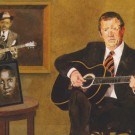
Johnnie Bassett, "The Gentleman Is Back" (2009)

NICK DERISO: Refined, yet deliciously groovy, 72-year-old Johnnie Bassett's music -- and his bearing -- belies his family's rascally bootlegger roots.

It's perhaps no surprise, though, that many of the more well-known Florida-area bluesmen of the Prohibition era -- Arthur "Big Boy" Crudup, Lonnie Johnson, Tampa Red -- would stop by to sample the product. A young Bassett got to know them while they boozed, and eventually folded their unique idiosyncrasies into his own sound.

Each is part of the larger tapestry of "The Gentleman is Back," set for release on June 30 by Slydog Records. Bassett moves with grit and aplomb -- in a manner befitting both the album cover and the man's long-held nickname -- from Hoagy Carmichael's "Georgia on My Mind" to the high-stepping "Keep Your Hands Off My Baby," from the R&B groove of "A Woman's Got Ways" and the lightly salacious "Nice Guys Finish Last" to the album-closing, long-form jazz-influenced "My Old Flame."

How Johnnie Bassett never found a wider audience, we'll never know.

His was certainly a career that started well. After a move to Michigan, Bassett got his first guitar, formed a well-regarded band and got some work in the mid-1950s as the house band at Detroit's Fortune Records, the largest local indie at the time. He gigged with John Lee Hooker, Ruth Brown, Big Joe Turner and others, and played on the Chess Records single "Got a Job" by the Miracles.

Soon, however, that tune became a sad new reality. Though he'd eventually craft the five-time W.C. Handy Award-nominated "Cadillac Blues," Bassett never enjoyed the same blockbuster successes of, say, Robert Cray, Z.Z. Hill or B.B. King -- with whom Bassett shares an inviting elder-statesmanly demeanor. Bassett was eventually forced to find work in a variety of every-day professions -- dispatching cabs, working at the local auto plant.

But Bassett never stopped playing -- and he became a favorite, if largely unknown local delicacy. Beloved around town, where he earned a lifetime achievement award from the Detroit Blues Society in 1994, he was without a record label deal.

All of that changed when Gretchen Carhartt wandered into the Dirty Dog Jazz Cafe, in the Detroit suburb of Grosse Pointe, during a recent four-night stand by Bassett. Carhartt, after hearing a rendering of Hoagy Carmichael's "Georgia" rich with raw emotion, signed him right then.

The result is the superlative "Gentleman," which features Bassett's current working group the Brothers Groove (including keyboardist and producer Chris Codish); the tough Motor City Horns (rousingly featured on "Keep Your Hands off My Baby"); a notable turn on pedal steel by James Morris on the soulful lament "I Can't See What I Saw In You"; and Hammond whiz Duncan McMillan -- who wrote "I'm Lost." "Your Real Gitchieegumee" was composed by jazz drummer Leonard King; Codish and his father Robert penned much of the rest of this record.

Together, they underscore Bassett's ageless marriage of old-time jump blues, jazz guitar in the style of fellow Detroit product Kenny Burrell, and cotton-picking Delta picking.

Elegant yet earthy, with none of the out-sized trickery found on so many blues guitarist's records, "Gentleman" is the career-defining effort that this throwback grandfather of five has deserved for so very long.


Purchase: Johnnie Bassett - The Gentleman Is Back

MORE…

Tuesday, June 23, 2009

East West Quintet - Vast (2009)

by Pico

East West Quintet, based out of the decidedly eastern locality of Brooklyn, NY, is coming out with only their second full-length album today, Vast. Starting out in 2003 as an outfit celebrating the soulful hard bop popularized by Cannonball Adderley and his famous quintet, East West quickly absorbed much of the diverse music of their NYC environs: hip hop, punk, rock and other breeds of music. In the process of doing this, they've managed to create their own brand of fusion jazz that adds the raw power of rock while retaining the immediacy of jazz.

Comprising of Dylan Heaney (saxes, flute), Simon Kafka (guitar), Mike Cassedy (various keyboards), Benjamin Campbell (acoustic and electric bass) and Jordan Perlson (drums), the boys crafted Vast from ten originals penned variously by three of the band members.

This five-piece band's distinctive vision of rock-jazz---or more accurately---jazz that rocks---is sketched out from the first track "The Triumph." Starting out with a low key modulation, the deceptively simple melody builds up to a hard-rocking crescendo that's lead by Heaney's sax and guest Phil Rodriguez's trumpet. The two-part title track "Vast" likewise slowly emerges from soft beginnings to evolve into an anthemic alt-rock march that culminates into Perlson and Heaney seemingly egging each other on.

Just when you think the band may have strayed outside of shouting distance of jazz, we get "Over The Falls" with its majestic opening that comes within a hair of John Coltrane's "After The Rain." What follows is a winsome repeating bass figure played out in 13/16 time (I think) that provides the springboard for an extended thoughtful piano solo by Cassedy, and some impressive drum soloing courtesy of Perlson.

"Comet" is built upon a boss guitar riff, and moves into a muscular bass/drums beat while Heaney blows his tenor like Rollins over a rock rhythm and makes it sound like the two belong together. "Daffodil 11" is East West's idea of a melancholy ballad and Kafka finds the right soft notes, but even here the song bristles with energy derived from Perlson's always-active drums.

"Gangster Rap" won't remind anyone of Snoop Dogg, N.W.A. or Ice-T, but it chilled-out groove was evidently inspired from that school. What's best about this cut is that it brews together so many other strains. Pop, rock, jazz, punk combine to form a composite piece that holds together nicely through all the mood changes.

So the overall story line of Vast is that it portrays the East West Quintet as a combo that incorporates so many contemporary styles and manages to keep its jazz sensibilities intact. It sounds very listenable but pretty challenging at once. That's not so easy to pull off, especially from a band that's really just getting started. A lot of contemporary jazz acts might be heralded as a bridge for rock fans to cross over into jazz, but Vast is a one of the better built bridges of that kind I've heard in a long while.

Vast is offered on the Native Language Music label. Visit East West Quintet's website here.


Purchase: East West Quintet - Vast CD or mp3 album.

MORE…

Monday, June 22, 2009

Quickies: Wilco, Tortoise, Cyril Neville


by Pico

December 17, 2008. That's the last time a non-jazz record has appeared on a Quickies column. In the intervening half-year there's been so many fresh non-jazz records that merits at least a few paragraphs, and sometimes the full fledged reviews can't adequately cover 'em all. So guess what...it's a Quickies devoted exclusively to music that doesn't start with and "j" and end with a "z."

Just in recent weeks I've seen some which dropped that came under serious consideration for inclusion, but since I try to keep it down to three or so, some pretty big names got left out. One of them is Elvis Costello, who has a new T-Bone Burnett collaboration Secret Profane And Sugarcane, but I didn't find much to say about it, aside from two or three tracks. It's well made, to be sure, but the album feels like it was little more than a well-polished genre exercise. The other album I was tempted to devote some written thoughts toward is Iggy Pop's diversionary tactic Preliminaries. It's really not all that bad, actually, although it's bound to appeal to fans of Tom Waits more than fans of The Stooges. But I need to digest to that one some more before I can say anything substantial about it.

What did make the cut were those I can conjure up more enthusiasm for. One is an alt-rock record, another delves in post-rock, and lastly a blues record with a strong Louisiana connection, always a plus around here. So for this time around, jazz is dead, but the music remains very much alive:


Wilco Wilco (The Album)

A couple of years ago I thought that Wilco's Sky Blue Sky was one of the two or three best rock albums of 2007 and other critics obviously agreed, as it ended up on many a year-end list. The band seemed to have found a formidable formula settling into an early-seventies rock vibe, as well as bringing on board a guitarist who provided the band with a enviable one-two punch: the combination of Jeff Tweedy's tight melodies/beautifully nuanced vocals with the Rottweiler guitar of Nels Cline.

Wilco has had a history of evolving, so their upcoming self-titled release came at a fork in the road: do they keep moving forward or do they stick with the winning formula they stumbled upon on Sky Blue Sky? The answer seems to be the latter.

As a sequel-type of record, this album provides diminishing returns, but only slightly. That is to say, it's still quite good, and there are plenty of songs that demand the repeat button. "Wilco (The Song)" is a succinct, three-minute indie rock cruncher. "Bull Black Nova," guaranteed to be most everyone's favorite cut on the album, rings with an urgent repeating note and climaxes with a sick, whacked solo by Cline at the end. You will not that kind of guitar playing on any other rock band, as Cline is an original. If you have been reading this space long enough, you already know that, naturally.

"Country Disappeared" stands in direct contrast to "Bull," a sublime, piano based breezy melody that leverages Tweedy's country roots without really being country. Two songs, "You And I" (video below) and "You Never Know," coming one right another, interestingly quote George Harrison's "My Sweet Lord" in different spots.

Waiting until their seventh album to assign the self-titled moniker signals to the world that "this is who we are." If it's true that Wilco's journey from their alt-country beginnings has ended here, they have found a nice spot on which to settle down.

Wilco goes on sale in both CD and digital form on June 30.


Purchase: Wilco - Wilco (The Album)


Tortoise Beacons Of Ancerstorship

For a while now, I've been trying to wrap my brain around the whole "post rock" concept. While no description neatly fits all bands who play this style, the music to me sounds like "anti rock" made by ironically borrowing components of rock, especially Canterbury Scene (Soft Machine) and Krautrock (Can). But there's often no soloing and no singing; both are eschewed in favor of moods, textures and shifting series of riffs. An ambient bent can be detected in its softer passages, too. Some post rock incorporates some jazz elements to it, and sometimes even gets called "jazz-rock,' but from what I've heard, those elements are pretty minimal. In a nutshell, it's the alternative to alternative rock.

Even as I've been listening closely to Marco Benevento's records and sampled some Sigur Rós , I still can't quite locate the center of this music. But post rock came along well before these acts, and Chicago-based Tortoise's Millions Now Living Will Never Die from back in 1995 was one of the genre's earliest benchmark albums.

Which brings me to this album, the latest by Tortoise. Beacons Of Ancestorship doesn't really solve the puzzle for me, but doesn't mean it isn't an intriguing listen. "High Class Slim Came Floatin' In" is a groove propelled by a snare drum with brushes and a thick slab of a Kraftwerk-style synth plopped on top of it. "Prepare Your Coffin" (video below) is one of this group's more concise melodies, with some tough rock bass lines. "Gigantes" has some exotic and compelling percussion arrangement going on, while "Yinxianghechengqi" grunts and growls with a punk sensibility. While the bass and drums groove is deadly, "Minors" probably got its name from its melody being a series of minor chords.

Yeah, I think I can dig this record, even if I can't decide if I like the music style Tortoise plies their trade in. The grooves and the off-center ambiance of these songs are just a little bit too irresistible. Beacons is coming out tomorrow.


Purchase: Tortoise - Beacons Of Ancerstorship


Cyril Neville Brand New Blues

When the topic of the Neville Brothers come up, it's usually and honey-voice Aaron or the Meters cornerstone Art that get the most mention. However, Charles and Cyril have been serious players in the New Orleans R&B scene, too. Cyril, after all, provided his percussion and vocal help for the Meters just as they were peaking with Fire On The Bayou (that's his charming coonass rambling on "They All Ask'd for You") and he quickly proved to be an indispensable member of the Neville Brothers, where he brought his love for reggae and other forms of world music to the group, which did much to shape the group's sound. On some days "My Blood" is my favorite cut from the Neville's Yellow Moon because of his sincere and passionate lead vocal. Outspoken and street tough---he once survived a brutal throat slashing---he became the conscious of the Brothers and an outspoken advocate, famously authoring an angry article about injustice and why he won't return to New Orleans after the devastation of Hurricane Katrina (Neville lives in Austin, TX these days).

Now I don't believe that burning passion always translates into good music, but I do believe in that Cyril's case it makes his music better, with a focus and clarity that's often lacking in even many of his contemporaries these days. It's his passion that to a large degree is the driving force behind Brand New Blues, and combined with the African, Caribbean and Creole temperament of his blues music, it's a little bit like Taj Mahal. Actually, if Taj made Brand New Blues it would be considered one of his better records; that's how good this record is.

And why is that? Because Taj finds the blues in just about every style, mood and tempo of roots music, and so does Neville. The kickoff track "I Found Joy" (see video below) is a buoyant, second-line blues in the proud tradition of Prof. Longhair. "Brand New Blues" exudes that Hi Records soul sound of Al Green, even as it's got a funkier edge. Neville moves headlong into funk-rock with "Shake Your Gumbo," a riff-heavy number mashed up with rich African percussion that Neville pulls off with the swaggering persona of Slim Harpo. "I'll Take Care of You" thrives in Bobby "Blue" Bland territory. "Cream Them Beans" is a playful rewrite of "Scratch My Back," and "Move My Mountain" is a hand-clapping gospel number. The extended closer, Bob Marley's "Slave Driver" is a slow blues replete with gutter-low guitar and Neville's convincing rendering of despair, turning the song into a heart-wrenching lament over a city exploited and neglected (post-Katrina New Orleans).

Brand New Blues has been out since April 7, but I haven't seen much press on it since then. It needs more notice; blues records this gritty, honest and culturally rich don't come around that often. Catch it while it's still fresh.


Purchase: Cyril Neville - Brand New Blues


"Quickies" are mini-record reviews of new or upcoming releases, or "new to me." Some albums are just that much more fun to listen to than to write about.

MORE…